

Forget The Blue Pill: Boston Specialist Breaks Rank And Reveals The "15-Minute Chair Method" That Has Men Over 50 Waking Up Ready Again — In As Little As 3 Weeks
After 23 years of writing prescriptions he knew would fail, Dr. Robert Hayes says the quiet part out loud: it was never your blood flow, and it was never your age. It's one dead muscle nobody ever told you to train — and 15 minutes a day, sitting in your own chair, wakes it back up. No pills. No needles. No clinic. No one ever has to know.

Dear Friend,
You already know the moment I'm going to describe.
Her hand on you. That half-second where you check — and you already know the answer before you finish checking.
And then the worst part, which isn't even the failure. It's the performance that comes after it. "I'm just wiped out from work." Said in a light voice, so it doesn't become A Conversation.
She says "it's fine." She rolls over. And the two of you lie there in the dark, three feet apart, both wide awake, both pretending.
I'm about to make every urologist, pill manufacturer, and "men's clinic" in America very uncomfortable.
Because what I'm about to share could torch billions in their revenue.
After 23 years, I don't care anymore.
After watching thousands of men come back needing higher doses…
After sending patient after patient down the road from pills, to injections, to a surgery that removes tissue they can never get back…
After a 54-year-old named David sat in my office, healthy as an ox, and could not lift his eyes off the corner of my desk…
I finally went looking outside my own field. And what I found made me furious — because it had been sitting there the whole time, one specialty over.
Here's what nobody tells you: this thing has a point of no return.
Not a disease. Not your age. A line — and it's a muscle line.
The pelvic floor muscles start atrophying in your 40s. Silently. Invisibly. Exactly like any muscle you stop using.
By the time most men notice something is off, they've already lost 30 to 40% of the muscle function that controls an erection.
And past that line, the pills stop mattering. You can force all the blood in the world into a chamber that can't hold it.
You know the tells better than I do.
You've started going to bed at a different time than her. Not on purpose — you'd never call it that. You just find things to do until the risk is over.
You've started taking the pill "just in case," on a night when nothing is even planned, because being ready has become a logistics problem.
And somewhere in the last year or two, you stopped being the one who starts it. You wait now. Because if she starts it, at least it isn't your idea that failed.
If any of that landed, read the next 5 minutes very carefully. They may be the most important 5 minutes of your life.
My name is Dr. Robert Hayes…
I'm Chief of Male Performance Medicine at a private clinic in Boston, and I've spent 23 years in men's sexual health and pelvic rehabilitation.
I've treated construction foremen, airline pilots, and a 71-year-old marathoner who could still outrun his son.
And I'm about to rip the lid off the reason millions of men stay stuck on a prescription that gets weaker every year — while an industry laughs all the way to the bank.
THE 10-SECOND TEST THAT TELLS YOU HOW MUCH TIME YOU HAVE LEFT
Before I tell you anything else, do this right now. While you're reading. Nobody around you will know.
It takes 30 seconds and it will tell you more than any blood panel your doctor has run.
Sit up. Feet flat. Don't clench your stomach, your buttocks, or your thighs — this is not about those.
Now squeeze the muscle you'd use to stop yourself mid-stream in the bathroom. Just that one. Lift it up and in.
Hold it. Count slowly to ten.
Now answer honestly:
Could you hold it for the full ten seconds — steady, without the squeeze fading?
YES — rock solid for ten, and I could feel exactly which muscle I was using: Your pelvic floor still has real tone. Whatever else is going on with you, you're in the best starting position of anyone reading this page. Keep it that way — this is the one muscle on your body that never announces it's leaving. It just leaves.
PARTIALLY — it started strong and faded around four or five seconds: Read this slowly, because that fade is the entire problem in miniature.
That is precisely what your body did the last time it happened. It started. It was there. And then, somewhere in the middle, it quietly let go — and you felt it go, and there was absolutely nothing you could do about it while it was happening.
You just reproduced that failure with a muscle, on purpose, in ten seconds, fully clothed. That wasn't nerves. That wasn't stress. That wasn't her. You are mid-slope, and this is the window.
NO — I couldn't isolate it at all, or I felt almost nothing: Then you just found your answer, and it was never in your bloodstream.
You cannot contract a muscle that has gone dormant. Every pill you have ever swallowed, every supplement, every "maybe it's my testosterone" — all of it was aimed at a target that was never the problem.
Which means the last few years of blaming yourself were wrong. You weren't failing at this. You were treating the wrong organ.
I've watched grown men — foremen, pilots, a retired colonel — do that ten-second test in my office and go completely silent. One of them looked at the floor and said, "So it's not in my head."
No. It never was. And I'm sorry it took someone 23 years to tell you.
THE NIGHT A 54-YEAR-OLD MAN MADE ME ASHAMED OF MY OWN PROFESSION
His name was David. He was 54.
Healthy weight. Normal testosterone. No diabetes. No heart disease. Rode his bike to work.
By every standard I was trained to measure, that man should have had zero problems in the bedroom.
He sat in my office on a Tuesday afternoon, staring at the corner of my desk, and told me the pills had stopped working after three years.
Then he said the sentence I've never been able to shake:
“Doc, I've started going to bed after she's already asleep. It's just easier.”
I asked him how long he'd been doing that.
He had to think about it. Fourteen months.
Fourteen months of a man loving his wife from the other side of a hallway, waiting for the light to go off, so that nothing would have to be explained.
And then he told me the part that actually broke me. He said she'd stopped asking.
Not angry. Not cold. She just… stopped. And he said the house had gotten very polite.
Twenty-three years in practice. I'd heard versions of that story hundreds of times — always in that same flat voice men use when they've decided something about themselves is simply over.
And I had nothing.
Nothing except the next rung on a ladder I already knew where it ended.
Because that's the whole protocol, and every urologist reading this knows it:
50mg didn't hold? Go to 100. That buys a year, maybe two.
100mg stopped working? Try a different molecule. Another year.
Pills done? Now we talk about injections. Needles. Before sex. Every time.
Injections failing? Now we talk about an implant. A $20,000 surgery that removes tissue you can never get back.
It's a slow-motion car crash. And I was the one behind the wheel, one rung at a time, for two decades.
That night I didn't sleep. I kept coming back to the same question:
Why do they always stop working?
A treatment that actually fixes something doesn't need a bigger dose every year. That's not a treatment. That's rent.
So I did the thing they train you not to do. I went looking outside my own specialty.
WHAT I FOUND ONE SPECIALTY OVER MADE ME SICK TO MY STOMACH

For three months I read like a man possessed.
Not urology journals — I'd already read those. I went into the literature from pelvic floor rehabilitation, a field most urologists never open a single paper from.
Physical therapists. Post-prostatectomy recovery. Incontinence clinics.
And what I found made me angry. Not at my patients. At myself, and at 23 years of aiming at the wrong target.
Here's the sentence that rearranged everything I thought I knew:
An erection is not about blood flowing IN. It's about blood STAYING IN.
Read that again, because every prescription written in this country works on the first half of it.
There is a sling of muscle at the base of the penis — the pelvic floor. It has exactly one job in this equation. It clamps down and traps the blood. It's a valve.
Strong valve: blood goes in, stays in, stays hard.
Weak valve: blood goes in… and leaks straight back out.
It's like filling a bucket with a hole in the bottom.
And now the part that should make you furious.
Turning up the water pressure is exactly what the little blue pill does. It forces more blood in. That's the entire mechanism.
It does nothing — not one thing — about the hole.
Which is why it works at first. Why it needs a bigger dose every year. And why it eventually stops working for almost every man who takes it long enough.
You were never failing the treatment. The treatment was aimed at the wrong end of the problem.
THE DEAD MUSCLE THAT'S BEEN SABOTAGING YOU FOR 10 YEARS

Here's what the pelvic floor literature laid out, and what no one said to me in 23 years of conferences.
Starting in your 40s, those muscles begin to atrophy. Silently. Invisibly. Exactly like your shoulders would if you never lifted anything again.
Nothing hurts. Nothing shows up on a blood panel. There is no symptom — until the valve is already weak.
And here's the part that made me furious on my patients' behalf:
Your instincts were right the entire time.
When a man tells me “something feels weaker” — he is not imagining it. The muscle is weaker.
When he says “it doesn't feel like it used to” — he's correct. The valve is failing.
When he says “it works for a while, then stops” — that is the exact signature of treating a symptom and ignoring the cause.
Every man who ever said those words to me was describing the mechanism accurately, and I filed it under anxiety and wrote a prescription.
This is not a disease. It's a muscle that fell asleep, stuck in a loop.
And it isn't one problem — it's four, feeding each other. Every treatment on the standard menu only ever touches the second one.
Step 1 — The pelvic floor loses tone. Nobody notices, because nothing hurts. There is no scan for this and no test on your annual physical.
Step 2 — The valve stops sealing. Blood enters and leaks back out. This is the step the pill was built for: force more in, faster than it leaks.
Step 3 — Because the pill works, the muscle is never asked to do its job. And a muscle that is never asked atrophies faster, not slower.
Step 4 — Weaker valve, bigger leak, so you need a bigger dose. Which weakens the valve further. Which means a bigger dose.
That's the loop. That's why the dose always climbs. The treatment is quietly feeding the problem it was prescribed for.
Now look at every option on the standard menu with that loop in front of you:
Viagra / Cialis? Forces vasodilation. Does nothing for the muscle that holds blood in. A patch, not a fix.
Testosterone therapy? Addresses hormones. Does nothing for muscle atrophy. And most men with this problem have normal T anyway — that's what makes it so maddening.
Supplements? Zero effect on pelvic floor strength. An expensive placebo with good photography.
Kegels? Right idea. Wrong execution. Most men squeeze the wrong muscles entirely — and even done perfectly, a voluntary squeeze is far too weak to reverse years of atrophy.
Shockwave clinics? They work on blood vessels. Still nothing for the valve. $3,000+ for a partial answer.
Every one of them fails for the same reason: none of them wake up the dormant muscle.
It's treating a flat tire by adding more air. The hole is still there.
And here's the uncomfortable part: there's no money in fixing it.
A pill is a subscription. Twice a week at $30 to $70 a dose is three to seven thousand dollars a year, for the rest of your life, and the dose only goes up.
Now do the multiplication I did at my kitchen table that night.
Roughly 30 million American men have this problem. Every one of them worth three to seven thousand dollars a year — forever, with the dose climbing.
That is a billion-dollar river of money that only flows while you keep failing.
Not while you get better. While you keep failing. Read that twice, because it explains every appointment you've ever had.
Nobody has to be evil here. Nobody has to sit in a room and conspire. The machine simply has zero reason to hand you the one answer that ends the billing — so it doesn't, and everybody goes home feeling like a good person.
A man on pills is an annuity.
A man who retrained the muscle is a customer they lost forever.
And now you know why nobody ever said the words "pelvic floor" to you.
So the ladder stays exactly as it is:
Pills → higher dose → different pill → injections → implant → and at every rung, someone gets paid.
It's a beautiful business. If you're the one billing it.
THE 15-MINUTE FIX THAT WAS HIDING IN PLAIN SIGHT THE WHOLE TIME

Remember David? The 54-year-old who'd started going to bed after his wife was already asleep?
He called me after five weeks. I still have the voicemail.
“Doc, I woke up ready this morning. First time in two years. No pill. It just… happened.”
No prescription. No needles. No surgery.
Fifteen minutes a day, sitting down, doing something so unglamorous I'm embarrassed it took me 23 years to find it.
Here's the whole thing:
To wake that valve back up, you have to do THREE things — and they have to happen together:
ACTIVATE — Reach the deep fibers you cannot consciously find. This is why Kegels fail: most men are squeezing their glutes and their abs and calling it a pelvic floor contraction. You can't train a muscle you can't locate.
OVERLOAD — Give the muscle a workload it hasn't seen in twenty years. A man doing Kegels perfectly might manage 60 or 80 real contractions in a session, and most quit by week two. Muscle doesn't rebuild on 60 reps.
RESTORE — Rebuild resting tone, not just squeeze strength. This is the one everybody misses. You don't want a valve you have to remember to close. You want one that holds on its own, at 2 AM, without you thinking about it.
Miss ONE of the three and you're back where you started.
That's why pills don't work. (No activation — the muscle is never asked to do anything)
That's why Kegels don't work. (No overload — and usually the wrong muscle entirely)
That's why the gadgets on Amazon don't work. (Vibration is not contraction. A massage is not a workout)
All three. Same session. Right order.
And here's the thing — physical therapists have been doing exactly this for decades.
WHAT $400-AN-HOUR CLINICS HAVE BEEN DOING QUIETLY FOR 30 YEARS

In pelvic rehabilitation clinics, specialists don't ask the muscle to contract. They make it contract.
Electrical muscle stimulation — EMS. The same category of technology that rebuilds a quadriceps after knee surgery, pointed at the pelvic floor instead.
Thousands of contractions per session. Far more than any man could produce voluntarily, hitting the deep fibers he could never find on his own.
The results are documented. Published. Not controversial in that field at all.
So I did what any doctor would do. I started sending patients.
And that's where it fell apart.
$200 to $400 a session. Most men need 12 to 20 sessions.
That's $4,000 to $8,000, minimum. And insurance almost never covers it for this indication.
Then there's the part nobody puts in a brochure: booking twelve appointments, at a clinic, for this. Sitting in a waiting room, handing a receptionist your name.
Out of the first eleven men I referred, three went.
The other eight went back on pills — not because the pills were better, but because the pills didn't require walking through a door with your name on a clipboard.
So there it was. The solution existed. It worked. It had been sitting in physical therapy clinics for decades.
And it was completely out of reach for the men who needed it most.
That's when I started making noise about it. And that's when it got ugly.
WHEN YOU THREATEN A BILLION-DOLLAR SUBSCRIPTION, THEY COME FOR YOU
It started friendly, the way these things do.
A colleague — a good urologist, twenty years in — pulled me aside after a talk I gave:
“Robert, you're going to confuse people. Men need real treatment. Stay in your lane.”
My lane. The lane where I hand a man a prescription that we both know will need doubling in fourteen months.
Then the pharmaceutical rep who'd brought lunch to my office every other Thursday for six years simply stopped coming. No conversation. The lunches just ended.
Then I was quietly dropped from a panel I'd been speaking on for nine years. I found out from the printed program.
Then came the first letter from a law firm. “Concerned parties.” Language about statements “not aligned with the standard of care,” and a suggestion that I reconsider them.
Then a second letter, and this one wasn't about my statements. It was about my hospital privileges.
Understand what that is. That is a man in an office who has never met me, reaching for the thing I spent eleven years of my life earning, because I said something inconvenient out loud.
My wife asked me if it was worth it. I didn't have a good answer for her that week.
Let me tell you what I had actually done to earn all that.
I had suggested, out loud, that a man might strengthen a muscle instead of renting an erection.
That's it. That's the heresy.
And I understood the reaction perfectly, because the math is not complicated:
A man on pills is worth three to seven thousand dollars a year, every year, with the dose climbing.
A man who retrained the muscle is worth nothing to anybody.
No refills. No escalating dose. No appointment in six months to “see how we're doing.”
A patient cured is a customer lost. Nobody says that sentence at a conference, but the entire ladder is built on it.
Here's what none of them counted on, though.
While they were writing letters, a company had already spent two years shrinking clinical-grade EMS down to something a man could use at home, alone, for the price of a couple of months of pills.
INTRODUCING THE DEVICE THAT ACTUALLY WAKES THE MUSCLE BACK UP
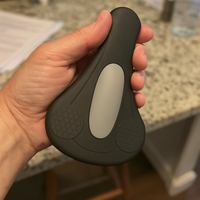
It's called the NeuroPulse.
And it is the first device I've seen that delivers all three requirements in one 15-minute session, at home, with your clothes on:
CLINICAL-GRADE EMS that drives over 12,000 contractions in 15 minutes — reaching the deep fibers you cannot consciously locate. That's the ACTIVATE and the OVERLOAD in one pass. No man on earth is doing 12,000 Kegels.
SMARTPULSE™ PROGRAMMING — four modes that vary intensity and rhythm across the session, so the muscle is trained rather than simply buzzed. This is the difference between a workout and a massage, and it's the entire difference between this and the vibrating gadgets on Amazon.
A SEAT-STYLE AEROFLEX™ FORM that puts the stimulation exactly where the pelvic floor sits. Nothing is inserted. Nothing goes anywhere. You sit on it, fully dressed, in an ordinary chair.
Medical-grade silicone. USB rechargeable. FDA registered. Quiet enough to use while somebody else is in the room.
You sit down, press one button, and let 15 minutes do what 60 half-hearted Kegels never could.
No appointments. No clipboard with your name on it. No copay. No pharmacy counter.
Just the one muscle in your body nobody ever trained, finally getting asked to work:
ACTIVATE. OVERLOAD. RESTORE.
HERE'S EXACTLY HOW IT REBUILDS THE VALVE IN 15 MINUTES A DAY

You put it on a chair. You sit down. You press one button. Here's what those 15 minutes actually do:
0-5 Minutes: The Activate Phase
Low-intensity pulses find the muscle for you. This is the part most men are not prepared for — you will feel a specific, deep flicker you almost certainly have never felt on purpose in your life.
That flicker is the muscle you've been failing to squeeze during every Kegel you ever half-attempted. It was there the whole time. You just had no way to reach it.
5-10 Minutes: The Overload Phase
Intensity climbs and the contractions come in rhythm. This is where the bulk of the 12,000+ contractions happen.
Understand the scale here. A disciplined man doing textbook Kegels gets maybe 60 good reps before his form falls apart. This is doing two hundred times that, at a depth he can't reach, without him having to remember anything.
That's the whole reason clinics use EMS instead of handing out exercise sheets.
10-15 Minutes: The Restore Phase
The pulses shorten and taper. This trains resting tone — the muscle's default state when you're not thinking about it.
This is the step everybody misses, and it's the one that matters most. Because you don't want a valve you have to consciously hold shut. You want one that seals at 2 AM, on its own, while you're asleep.
Then you stand up and go about your day. No recovery. No soreness. Nothing to clean.
And here is what the first weeks typically look like, in the order men report it:
Week 1-2 — “Something is activating down there.” Muscles you didn't know you had, starting to answer.
Week 3-4 — Morning erections start coming back. For a lot of men, the first spontaneous ones in years.
Week 6-8 — Firmness and duration hold. This is where most men quietly stop reaching for the pill, not because anyone told them to.
Not “managed.” Not “masked” for four hours at a time.
Actually. Trained.
I don't expect you to take my word for any of this. So here are two men who wrote to me — one of whom told me, in his first email, that he assumed I was running a scam.
“I'll be honest with you doc, I ordered it to prove you wrong. I'd already been burned twice on this kind of thing and I was angry about it. Week three my wife rolled over one morning and just looked at me. Didn't say anything. Just looked. First time in about two years I wasn't the one apologizing.”
— Ronald T., 61, Michigan
“What got me wasn't the performance part, it was that I stopped doing the math. Every evening for four years I'd been running a calculation in my head about timing and whether I needed to take something. That calculation is just gone now. I didn't realize how much room it was taking up.”
— Stephen A., 57, Oregon
And here's the part I want you to sit with.
Atrophy doesn't pause while you think about it. Every month you wait is another month of:
● Paying rent on an erection instead of owning one
● A dose that only ever goes one direction
● A muscle getting quieter, because nothing is asking it to work
Run the numbers once, honestly. The pills run three to seven thousand dollars a year. The clinic protocol runs $4,000 to $8,000, and you have to book twelve appointments for it.
The device is a one-time $120.
That is less than two months of the prescription you're already paying for — and unlike the prescription, you only buy it once.
MY PERSONAL 60-DAY "WAKE UP READY OR IT'S FREE" GUARANTEE

Look, I get it.
You've been burned before. Probably more than once, and probably by something in this exact category.
A supplement that promised everything. A gadget that showed up looking nothing like the photos. Money spent on hope, quietly written off.
So here's the deal:
Use the NeuroPulse for 60 days.
Fifteen minutes a day, sitting in a chair you already own. Two full months — which, not by accident, is long enough to get past the Week 6-8 mark where men stop reaching for the pill.
And if you get to day 60 and nothing has changed — if you never got a morning back, never felt the difference, never had the thought “wait, that hasn't happened in a while”…
Send it back and I'll refund every penny.
No forms. No “store credit.” No return-merchandise runaround. No questionnaire asking you to describe your sex life to a support agent.
Email support@neuropulsemen.com, write “it didn't work,” and you're done.
Your refund is processed within 48 hours of the return being received.
Why would anyone offer that on a product in this category?
Because I already know what the return rate looks like. Across more than 13,000 customers, refunds run under 2%.
Roughly one man in fifty sends it back. The other forty-nine keep it — and a fair number of them buy a second one for the office.
“I want to be clear that I fully intended to return this. I even kept the box, which my wife made fun of me for. The box went out with the recycling in June and I haven't thought about any of this since.”
— Dennis W., 64, Pennsylvania
You're not risking $120. You're risking a stamp.
THE CHOICE THAT DECIDES YOUR NEXT TEN YEARS IN THAT BEDROOM

Right now you're at a fork, and both roads are already paid for. One with money, one with something else.
Path #1: Change Nothing
Keep taking a pill that forces blood into a chamber that can't hold it. Keep planning the evening around a 45-minute head start. Keep watching the dose climb, because that's the only direction it goes.
Keep paying three to seven thousand a year, forever, for a problem that is never getting addressed — only postponed.
And keep letting the muscle get quieter, because on this path nothing ever asks it to work again.
Here's the honest version of Path #1: it doesn't hold steady. Atrophy is not a plateau. In five years the same pill does less than it does tonight, and you'll be having a very different conversation with a very different doctor about needles.
But the money and the needles aren't the real bill on this path.
The real bill is that the distance becomes normal.
It happens so slowly that nobody can point to the week it started. You go to bed at different times. You touch each other less, because touching became a question with a bad answer. She stops asking, because she got tired of watching you flinch.
And one day you realize the two of you have become extremely good roommates. Affectionate. Polite. Nothing wrong at all, if you don't look directly at it.
That is what David lost fourteen months of his marriage to. Not to a disease — to a muscle nobody ever told him to train, and to the silence he kept about it.
Path #2: Train The Muscle
Spend $120 once — less than two months of what you're already spending — on the one thing on this list that targets the actual mechanism.
Sit on it for 15 minutes a day, in a chair you already own, with your clothes on, while you answer email.
Give it 60 days. If nothing changes, you mail it back and you're out a stamp.
One path costs you thousands a year and ends at a surgery. The other costs $120 and ends with you not thinking about this anymore.
I've watched men take both. I know which one David wishes he'd found at 51 instead of 54.
HERE'S EXACTLY WHAT TO DO IN THE NEXT 5 MINUTES
Click the button below that says “CHECK AVAILABILITY NOW.”
1. Confirm the device is still in stock (this page has been getting more traffic than we planned for)
2. Enter your shipping info — orders in before 3 PM EST ship the same day
3. It arrives in plain, unmarked packaging. No product name, no logo, nothing on the label that says what's inside. Your mail carrier learns nothing. Neither does anyone else in the house.
4. Charge it, put it on a chair, and use it for 15 minutes the day it lands
5. Then do that again tomorrow. And the day after. That's the whole protocol — there's nothing to track, measure, or remember
Now let me say out loud the thought you are having at this exact second.
“I'll come back to this later.”
You won't. And I'm going to be blunt with you about why, because being polite about it has never once helped a man in my office.
You won't come back because this subject is humiliating, and closing the tab makes the humiliation stop for tonight. That's it. That's the whole mechanism.
So here's how it will actually go. You'll close this. You'll have one decent night this week and you'll use it as evidence that it isn't that bad. The pill will still sort of work, so there's no emergency.
And then it's eight months from now. The muscle is weaker, because eight months of nothing is eight months of atrophy. You're reading a page exactly like this one, further down the slope, doing the same math with less time.
I have watched that eight months happen to more men than I can count. David lost three years to it. Fourteen of those months he spent going to bed alone on purpose, in his own house, next to a woman who eventually stopped asking.
He'd give anything to have started this on a random Tuesday when he still had the option.
You have that option right now, and it costs you nothing to take it. Sixty days. My dime. If it doesn't work, you mail it back and you're out a stamp.
The muscle does not wait while you think it over. That is the one sentence in this letter I'd ask you to remember.
To your health,
Dr. Robert Hayes, MD
Chief of Male Performance Medicine
23 Years in Men's Sexual Health & Pelvic Rehabilitation
P.S. — Do the ten-second test one more time. Right now, before you close this tab. If the squeeze faded before you hit five, you just watched the exact failure happen in your own body, on purpose, with your clothes on. That is not anxiety. That is not age. That is not her. It's a muscle, and no blood panel your doctor orders this year will ever find it.
P.P.S. — Keep the pill. I mean it. Don't throw anything out and don't announce anything to anybody. Most men in my tracking simply stopped reaching for it somewhere around week six — and only realized weeks later that they had. That's the goal. Not quitting. Not needing it.
P.P.P.S. — One last thing, and it's the part that costs men the most. The reason this went untreated for so long isn't the pills, or the doctors, or the industry. It's that almost nobody says it out loud — not to a wife, not to a friend, not to a physician. You don't have to say it out loud to fix it. It ships in a plain box, it works in a chair in your own house, and nobody ever has to know. Sixty days. Check availability here.
Harold Kemper
58 and I've been on the blue pill since I was 51. Doubled the dose twice in that time, which nobody warned me would happen. The muscle explanation in this article is the first one anybody has given me that accounts for WHY it kept getting weaker. Three weeks in on the device. Woke up ready Sunday, no pill. Sat on the edge of the bed a minute just taking that in
Dale Renner
Harold you just described my exact ladder. 50mg, then 100, then my doctor started using the word "options" which I have since learned means needles. Ordered mine Tuesday. Showed up in a plain brown box with nothing written on it, which honestly mattered to me more than I expected it to
Marcus Tillery
Retired engineer, so I need a thing to make logical sense before I'll spend a dime on it. Weak muscle equals weak function. Strengthen the muscle, fix the function. That is the entire argument and it's the only one in this category that doesn't ask me to believe in magic herbs. Week 5. Works the way it says on the tin
Gary Prewitt
Did the ten second test sitting in my truck at lunch. Made it to four. Then sat there staring at the steering wheel like an idiot, because I have been telling myself for two years that it's just stress
Ray Bosworth
Gary same. I got to six and told myself that was fine. It is not fine. That was the part of this that got me, you can't argue with your own body in a parking lot
Ed Boyles
My urologist has never once said the words pelvic floor to me. Not in nine years of appointments. He just kept writing the same script at a higher number. Reading this made me genuinely angry and I'm not an angry person
Thomas Emerson
63, Arizona. Six years and somewhere around fifteen thousand dollars on pills, supplements and one clinic that wanted three grand up front. Week 4 the mornings came back. Week 8 I stopped buying the pills. I feel 45 and I'm still a little annoyed it was this simple
Ian Maybury
Was skeptical about the whole sitting on it thing, figured it would be one of those gadgets that buzzes and does nothing. It is not a buzz. You feel a specific contraction in a specific place and you know immediately it is not the same category as the Amazon stuff
Henry Schaffer
Ian that was my worry too. Bought a vibrating thing off Amazon two years ago for forty bucks, complete waste. This is a different animal, the contractions come in a pattern and you can feel it change through the session
Walt Pruitt
The bucket with a hole in it finally made this click for me after fifteen years. My doctor spent all that time turning up the water pressure. Nobody ever once looked at the hole. I'm 66 and I'm only now finding this out from a comment section
Glen Norwood
Wife noticed before I said anything. That's the part I wasn't ready for. Five weeks in, she asked what was different, and I hadn't told her I'd bought anything
Paul Rowell
Glen that's the whole reason I ordered. Not for me really. For the part where my wife stopped asking
Andrew Whitcomb
For anyone on the fence about the discretion side of it, I use mine at my desk with the door open. It makes no sound. Nobody in this house has any idea and I've been doing it daily since March
Art Greeley
71 and still riding forty miles on Saturdays, so I did not think this applied to me. Turns out cardio has nothing to do with it, it's a completely separate muscle and mine had gone to sleep like everybody else's. Two months in. Wish I'd known at 55
Bill Kessler
Ordered one for me and one for my brother in law without telling him what it was for. He called me two weeks later. We have never talked about this stuff in twenty two years of being related and now we do, which is strange but good
Michael Krauss
52, Texas. Ten years of visits and my urologist never mentioned pelvic floor muscles once, he just kept raising the dosage. Six weeks after ordering this I don't need the pills. Ten years of that didn't have to happen
Lyle Lehman
I had an implant consult on the calendar for the 14th. Cancelled it. The surgeon actually asked me what changed. Make of that what you will
Eric Shelburne
Lyle please tell people that. I went through with mine at 59 and I would give a lot to have read this article first
MEDICAL & HEALTH DISCLAIMER: The information and other content provided in this page, or in any linked materials, are not intended and should not be construed as medical advice, nor is the information a substitute for professional medical expertise or treatment.
HEALTH DISCLAIMER: This website is not intended to provide medical advice or replace medical advice and treatment from your physician. NeuroPulse does not intend to diagnose, treat, cure or prevent any disease and does not constitute medical advice. Visitors are advised to consult their own doctors or other qualified health professional regarding the treatment of medical conditions. This site offers health, wellness and fitness information and is designed for educational purposes only. Do not disregard, avoid or delay obtaining medical or health-related advice from your health-care professional because of something you may have read on this site. The use of any information provided on this site is solely at your own risk. The author may share his or her personal experience which does not intend to override any medical authorities' or recommendations. The U.S. Food and Drug Administration has not evaluated the statements on this page. Individual results vary and are not guaranteed.
THIS IS AN ADVERTISEMENT AND NOT AN ACTUAL NEWS ARTICLE, BLOG, OR CONSUMER PROTECTION UPDATE.
